
How Childhood Attachment Experiences Can Lead to Low Self-Esteem in Adulthood
If you’ve struggled with low self-esteem all your life, you may have come to think that it’s just the way you are. You might have been told that you were “always a shy child”, or that you weren’t as sociable as other children. But even if this is true, there is usually a reason that children struggle with confidence in social settings. In this article, we’ll explore what causes low self esteem, and how early life attachment experiences shape how you feel about your worth in later life.

What is it Like to Have Low Self-Esteem?
Low self-esteem can truly hold you back in life and stop you from doing the things you want to achieve. It stop you from making friends, having romantic relationships and pursuing meaningful goals. It can rob you of all connection and joy in life and even lead to depression and anxiety if left unresolved.
If you struggle with low self-esteem, you likely shy away from meeting new people or shut down when someone compliments you. Being the centre of anyone’s attention can cause extreme anxiety, panic and shame. You may have a deep desire to run away, hide or burst into tears.
You could even find yourself in harmful or abusive relationships, believing that you don’t deserve any better and that no one else would want you.
If you have a low sense of self-worth, you probably know that isolating yourself and avoiding connection doesn’t help, but the fear of rejection, being judged or “doing things wrong” can be so debilitating, it just feels safer to keep your life small.
People tell you things like “don’t worry about what other people think”, or “just be yourself”, but if you dislike yourself so much, you will always expect others to dislike you too.
At its worst, this kind of self-loathing can create a negative feedback loop: when despising yourself causes self-neglect. Of course, this just leads to more shame when you see how far you’ve let yourself go. It acts as confirmation of all the negative things you believe about yourself, and making it seem impossible to change.
If you struggle with low self-esteem you might:
- Believe that you are unworthy or less than other people
- Have an intense fear of judgement from others
- Frequently put yourself down or criticise your own achievements
- Find it difficult to speak up for yourself or hold healthy boundaries
- Assume that people don’t like you or that they will reject or abandon you
- Feel like a failure or that you have nothing to contribute in life, work or relationships
- Use people pleasing or over giving to gain acceptance from others
- Seek validation through achievements, your looks or sexual behaviour
- Feel like you don’t fit in anywhere in life
- Struggle to make decisions and doubt everything you do or say
- Have a weak sense of self or lack of awareness of your “true” identity
So Where Does Self-Esteem Come From?
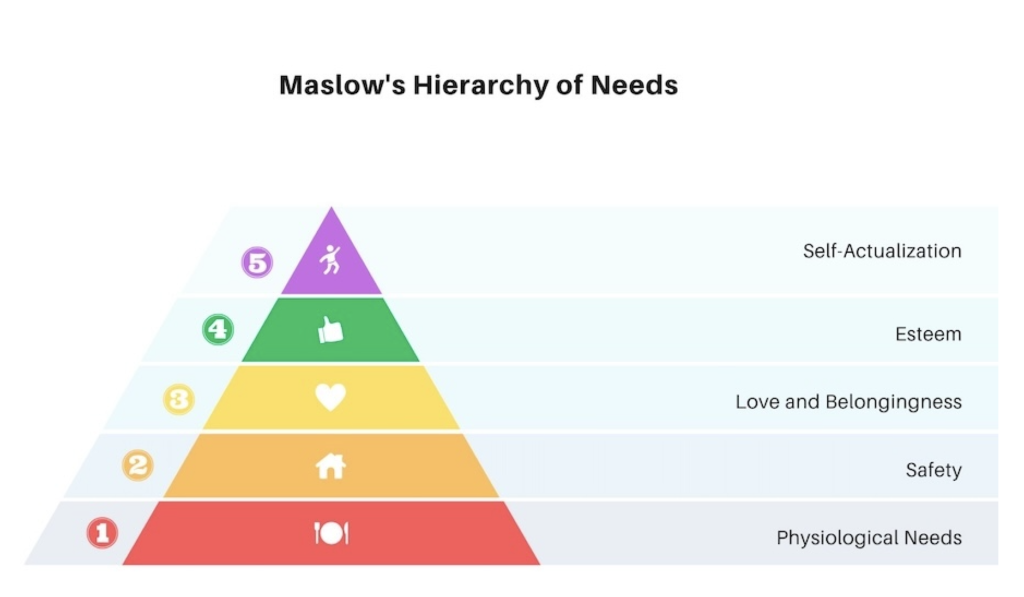
The main contributor to the development of healthy self-esteem, is how much esteeming you received in childhood. The Humanistic Psychologist Abraham Maslow, identified esteem as one of the essential core needs in order for a person to fulfil their potential in life.
In his hierarchy of needs pyramid, he placed the need for esteem as number 4 out of 5 needs, including:
- Physiological needs: The basic components for sustaining life such as air, food, water and sleep.
- Safety needs: The desire for stability, security and protection from danger, financial or physical stress.
- Love and belongingness: The desire for connection, nurturance, emotional intimacy, support, kindness and being part of a family, community or group.
- Esteem needs: The need to feel respected and to respect ones self, the desire for recognition and appreciation from others.
- Self-actualisation: The natural desire to achieve ones potential, live a meaningful and fulfilling life.
According to research by Maslow, and other experts in the field of childhood development such as John Bowlby, messages communicated by the childs’ primary caregivers behaviour and attention, help shape a child’s sense of value and inherent worth.
Bowlby’s research into attachment theory, proved that particularly abusive or neglecting parenting can have severe consequences on self-esteem and a person’s sense of self in later life.
However, low self-esteem isn’t always the result of severe childhood trauma. Even the most well meaning parents can leave emotional scars or pass down their own feelings of low self-worth to their children unintentionally.
Couple this with societal pressures on body image, gender inequality, difference shaming cultures etc., and you have the perfect recipe for a self-worth crisis.
What Causes Low Self Esteem?
Because a child cannot esteem themselves in the early years of their development, they are reliant on caregivers and environmental factors to build their sense of self-worth.
Some genetic factors may also play a part in how the child develops a sense of self, and some children are naturally more sensitive than others. Factors such as neurodivergence, sexuality and cultural environment can also play a part in this.
Children who are seen as different or sensitive are sadly more susceptible to bullying from peers or other family members. Physical differences or illness can also affect how a child is perceived and treated in some circumstances.
Bullying can have devastating effects on a child’s self-esteem which can carry through to adult life. And if the caregivers do not pick up on these harms or fail to act or protect the child, this too can result in feelings of unworthiness.
Some common factors that can affect a child’s sense of worth, include:
- Too much attention given to a child’s physical appearance, body weight or height
- Focusing on a child’s achievement as the main factor of their worth
- Criticising or teasing a child for exploring different ways of expressing themselves
- Pointing out physical “flaws” or genetic family traits (“poor you, you’ve got my nose” for example)
- Parents or caregivers who obsess over their own looks, body weight or fears about their worth
- Regularly forcing a child to dress or wear their hair in ways that make them feel self-conscious
- Parents or caregivers who are preoccupied with stress, mental health issues, addictions etc.
- Growing up in poverty or a financially burdened home
- Bullying, shaming or scapegoating a child
- Any form of abuse or neglect
All of these experiences can affect a child’s sense of worth and ability to feel confident in life. Children who experience several of these factors can be even more at risk.
However, it’s important to note that even children who grow up in extremely challenging environments, such as war torn countries or those who have experienced extreme bullying outside the home, can develop healthy esteem if they receive enough nurturing and supportive parenting in childhood.
And thankfully, even if your self-esteem has suffered due to these factors or anything else, it is possible to heal your sense of worth and develop healthy esteem in adulthood.
How does your attachment style affects your self-esteem?

How to Improve Self Esteem?
As Pia Mellody points out in her work around self-esteem, when we become adults, the task becomes an inside job. The time has passed for caregivers or anyone else to affirm your worth, so the responsibility now falls to you to do something about it.
This can seem scary because it can feel unachievable if you dislike who you are. However, trying to seek validation and approval from others does not work either.
Healthy esteem is not about feeling better than anyone else, it is about recognising that you are worthy despite any character flaws or physical differences. It is also about loving and accepting yourself, even on the days when you fall down.
This is not to say that we shouldn’t hold ourselves accountable if we’ve done something to hurt others or acted in a way that is against our core values. However, healthy shame allows us to feel disappointed in ourselves if appropriate, and in turn decide to repair things to the best of our ability, and aim to do better next time.
Some ways to improve self esteem:
- Befriend your inner critic: What is the voice inside that is shaming you trying to do? Is it trying to stop you from getting hurt, or does it want you to change your behaviour in some way? Understanding the motives of your inner critic can help you see past it and into what you really want and need.
- Do things that challenge you: Confidence builds from doing hard things. Challenging yourself helps you learn things about you that you may not expect. Take a cold shower or go to the gym like you’ve been wanting to. Start small and work your way up to the big stuff.
- Set mid and long term goals, and act on them: Setting goals helps you visualise yourself in the future, in ways you may not see yourself now. Visualisation is a powerful way to get yourself unstuck in the present and move you towards opportunity. Small steps become giant leaps in time.
- Develop acceptance and self-compassion: Accepting that you cannot control everything and that you don’t have to, can help lift a weight of impossible responsibility. Try to imagine how you would talk to a friend or loved one if they were in your shoes. Finding compassion for yourself is the greatest gift.
- Create a realistic inventory of yourself: List all the things you like and dislike about yourself. Turn the dislikes into action points, for things you’d like to do better. These are your growing edges, rather than things to beat yourself up for. Make a point to appreciate your positive traits daily too.
- Find a positive role model: Change can be scary, especially if we have no experience or examples to measure from. Finding someone to take inspiration from and model behaviours or perspectives on, even people in the media, can help you shift your mindset to believing change is possible.
- Reach out for help if you need it: If your self-esteem has reached such a low point that you are in active depression or extreme anxiety, it may not be possible for you to take the steps above right now. You don’t need to struggle on alone endlessly. Help and support is out there. Find a therapist or coach who can help guide you.
You can read more about hypnotherapy for low self-esteem on my treatment page if you’d like to explore how I could help.
Get in Touch if You'd Like to Learn More

If you’d like to explore how I could help you improve your self-esteem using Cognitive Hypnotherapy and Inner Child work, I offer a free confidential and no obligation 30 minute consultation.
Taking the first steps to getting help with your self-esteem can feel scary at first, but it doesn’t have to be. With gentle guidance and support, therapy and coaching can provide a safe and non-judgemental space for you to let go of what is holding you back and begin to step into your truth.
Everyone is born with inherent worth, no matter where you come from, how much money there is in your family, your sexual orientation, gender identity, religion or cultural background. You are worthy and equal to anyone else.
Ultimately, the only thing that can hold you back in life is you. The patterns and beliefs that developed in early life may have served a purpose once, but they don’t have to govern your life for ever. There’s a world of possibilities out there waiting for you, whoever you are, and together, we can help you find your path.
Book a Free Call