How Childhood Trauma Shows Up in Later Life
Growing up in a dysfunctional home can leave you feeling poorly equipped to deal with life. The hidden effects of childhood trauma leave emotional scars on your nervous system that can be difficult to identify.
When people come to me for help with emotional problems in their adult lives, they often tell me that they don’t understand why they feel the way they do.
Most of my clients report having had a good, or at least good enough, childhood and many have been successful in other areas of their lives. But so often they struggle with low self-esteem and repeated patterns in relationships that they can’t seem to break free of.
They wouldn’t think of their problems as stemming back to childhood trauma. But this is where the hidden effects of childhood trauma show up and sabotage your life.
In this article, we’ll explore how inner child healing works, why it’s effective, and how it can create lasting emotional change.
The Effects of Childhood Trauma on Attachment
As a child, your attachment system is shaped by the level of nurturing, support, connection and emotional availability you receive from your caregivers.
If you grew up with parents who struggled with their own emotional regulation issues, were stressed, anxious, angry or dismissive a lot of the time, the nervous system of a child experiences this as frightening, unsafe, abandonment or rejection.
This is what we call “attachment trauma”, or “relational trauma”, and it leaves deep emotional imprints on your “attachment blueprint” for life.
And if you experienced more extreme levels of abuse or neglect in childhood, the intensity of your trauma symptoms in later life will be greater too.
How Childhood Trauma Affects Adult Life
The hidden effects of childhood trauma can show up in many ways, including:
- Anxiety and overthinking
- Low self-esteem or self-doubt
- Fear of abandonment or rejection
- Difficulty trusting others
- People-pleasing or lack of boundaries
- Uncontrolled anger, rage or emotional outbursts
- Feeling unsafe in settings that logically you know are safe
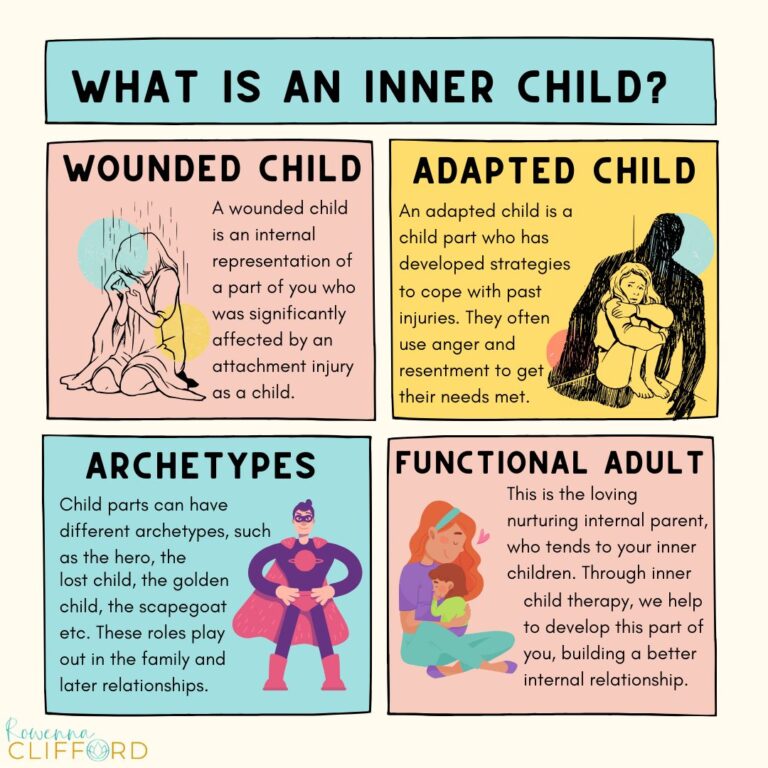
These patterns are not personality flaws — they are adaptive responses that developed in childhood to help you cope with uncertainty or inconsistent support.
Inner child work helps you understand and heal these patterns at their root and giving you the tools to repair unmet childhood needs.
Read on to learn more about how inner child work heals childhood trauma and how you can work with me.
How Inner Child Work Helps Undo The Effects of Childhood Trauma
1. It Identifies the Root Cause
Rather than just managing symptoms, inner child work goes deeper.
By revisiting early experiences in a safe and supported way, you can uncover the original moments where beliefs and emotional wounds were formed.
In my work, we also focus on developing your internal nurturing parent to support your inner child parts. This allows us to create new responses to early life experiences, changing the way your mind accesses memories and how your nervous system reacts.
This is key for healing trauma at its source — not just coping with it.
2. It Reprocesses Stored Emotions
Childhood trauma often leaves emotions “frozen” in time.
Inner child healing allows you to:
- Feel emotions that were suppressed
- Express what couldn’t be expressed at the time
- Release emotional pain safely
This process helps the nervous system update and recognise that the threat is no longer present. And that you have the resources to support yourself now in ways you didn’t at the time.
3. It Rewrites Limiting Beliefs
Many core beliefs are formed in childhood, such as:
- “I’m not good enough”
- “I’m not safe”
- “I don’t matter”
- “I’m unlovable”
Through inner child work, these beliefs can be challenged and replaced with healthier, more empowering ones.
4. It Builds Self-Compassion
One of the most powerful aspects of inner child healing is learning to relate to yourself with kindness rather than criticism.
Instead of asking, “What’s wrong with me?”
You begin to ask, “What happened to me that made me behave this way?”
This shift alone can be deeply transformative. It signals the start of releasing shame and developing compassionate curiosity and self-forgiveness.
5. It Strengthens Emotional Regulation
As you heal unresolved wounds, emotional triggers become less intense.
You may notice:
- Greater calm in stressful situations
- Improved connection and expression in relationships
- More confidence in setting boundaries
- A natural shift to kinder self-talk
This is because your nervous system is no longer in a state of heightened protection or self-blame.

Why Inner Child Work Is So Effective
Inner child therapy helps heal childhood trauma so well because it engages both the conscious and subconscious mind as well as dealing directly with the nervous system.
Approaches such as hypnotherapy, visualisation, and guided therapeutic techniques allow access to deeper emotional layers where trauma is stored.
This makes it especially effective for people who feel stuck or have not been able to move forward with talking therapies alone.
Signs You May Benefit from Inner Child Healing
You might benefit from inner child work if you:
- Feel emotionally triggered in relationships
- Struggle with self-worth or confidence
- Experience recurring patterns you can’t break
- Have a history of childhood trauma or neglect
- Feel disconnected from yourself or your emotions
Can Inner Child Work Be Done Alone?
While some inner child exercises can be done independently, working with a trained therapist can provide:
- A safe and supportive environment
- Guidance through deeper emotional processing
- Techniques tailored to your specific experiences
This is particularly important when working with trauma.
The Power of Inner Child Work and Hypnotherapy
Hypnotherapy is a powerful complement to inner child work because it allows access to the subconscious mind—the place where early experiences and emotional patterns are stored.
Through guided hypnosis, clients can:
- Revisit childhood memories safely
- Reframe past experiences
- Install new, empowering beliefs
This can accelerate healing in a gentle and effective way.
Final Thoughts
Healing childhood trauma doesn’t mean forgetting the past — it means freeing yourself from its hold.
Inner child work offers a compassionate and deeply effective way to heal emotional wounds, reconnect with yourself, and create lasting change.
When you heal your inner child, you don’t just heal the past — you transform your future.
Read what Pubmed says about the biological effects of childhood trauma.
Childhood Trauma FAQ
What is childhood trauma?
Childhood trauma is anything that you experienced in childhood that overwhelmed your nervous system, made you feel unsafe or hurt you physically or emotionally.
It can be related to direct abuse but not always. Sometimes even well meaning parents emotionally harm their children.
However, trauma usually has a lasting effect on the mind and body when it is either overwhelming, un-repaired or ongoing, rather than one off events.
Does childhood trauma ever heal?
Yes, you can heal from childhood trauma, but it is best to get help from a professional. Working through trauma can be challenging and it is difficult to do it alone.
A therapist who understands childhood trauma will be able to guide you to heal old emotional wounds and can help keep you safe.
How do I know if my childhood trauma is affecting me?
Symptoms of childhood trauma can affect people in many ways in adulthood. one of the main issues that comes with childhood trauma is a lack of self-esteem or feelings of not being good enough.
You may have painful memories that come back to your mind frequently or you may feel shame.
If you suffered abuse of any kind, you may experience deep anxiety, depression or CPTSD. If you’re worried that childhood trauma is affecting your mental health, reach out to your GP or a medical professional.
How can inner child therapy help childhood trauma?
Inner child work can be very effective for healing childhood trauma, as it helps heal past experiences and develop a more nurturing inner voice.
By safely releasing old emotions around past experiences and helping to make your younger parts feel seen, it is possible to move forward and find freedom from the past.
Is childhood trauma a diagnosis?
No, childhood trauma isn’t a diagnosis in itself. However, many people who’ve experienced childhood trauma have symptoms of CPTSD.
Although not everyone who has experienced childhood trauma will have the symptoms of CPTSD. The severity of the trauma you experienced will determine the severity of your symptoms.
If you’re concerned about childhood trauma and your mental health, please consult your GP or a mental health practitioner.