
INNER CHILD THERAPY FOR AVOIDANT ATTACHMENT

Healing Avoidant Attachment with Inner Child Hypnosis
Some signs you might benefit from Inner Child Therapy for avoidant attachment…
Do you find yourself feeling anxious, numb, grossed out or agitated when relationships become emotionally close?
Perhaps you feel like your independence is being threatened, or you struggle to express your needs for space so it’s easier to pull away.
It might have started out feeling great to connect with someone you really like… maybe you got excited and rushed full steam ahead, and now it feels like it’s all moving too fast and you want to run away.
Having an avoidant attachment style can make it feel uncomfortable when someone relies on you. It can be confusing, knowing you want closeness yet feeling overwhelmed and that intimacy becomes too intense.
For many years, people have seen attachment styles as being fixed in one position. However, we can actually develop something called “earned secure attachment”, and I help people do this through Inner Child Therapy.

What is Avoidant Attachment?
Attachment patterns develop in childhood and are shaped by the connections we have with our primary caregivers. How safe we feel in relationships is determined by how easy it was to connect with and get our needs met by our carers, and how attuned they were to our needs.
Avoidant attachment develops when, as children, our emotional needs were not consistently met — or when expressing emotions felt unsafe, overwhelming or rejected.
Many people with avoidant attachment grew up in environments where they learned:
- “Don’t rely on others”
- “Feelings aren’t welcome”
- “Be strong and self-sufficient”
- “Needing people is a weakness”
As a child, this strategy was protective. Turning inward and becoming independent helped you cope.
You may have unconsciously “shut off” your feelings to avoid the pain of being rejected. Over time, it can leave you struggling to feel your emotions at all and finding it difficult to connect with others.
As an adult, these patterns can show up as:
- Difficulty opening up emotionally
- Urges to pull away when relationships deepen
- Feeling uncomfortable with vulnerability
- Struggling to express needs or ask for support
- Preferring independence over connection
- Shutting down during conflict
- Feeling numb or disconnected from emotions
Underneath avoidant attachment is often a childhood wound that made you feel that closeness wasn’t safe.
This is where inner child therapy becomes a powerful tool that can heal and transform your beliefs around connection.
Is it Possible to Heal Avoidant Attachment?
Yes! It is absolutely possible to heal your attachment system, no matter what attachment style you have.
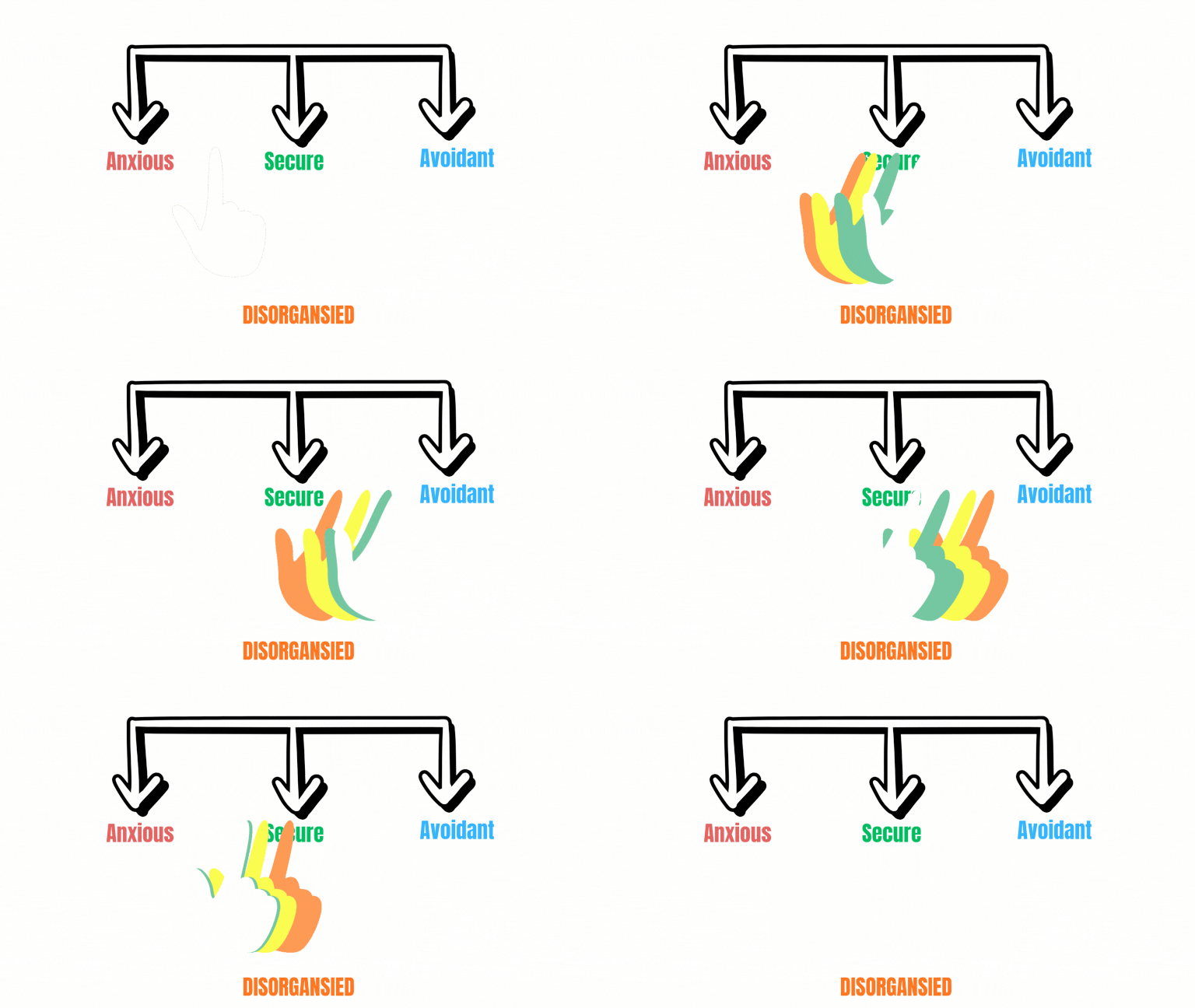
You see, your attachment style exists on a spectrum. Imagine if the of that spectrum is secure, with avoidant and anxious attached at either end.
As you heal your past emotional wounds which your fears are grounded in, you start to navigate back to the “secure” centre of the spectrum.
Once those fears and beliefs about the safety of connection start to change, you can begin experiencing new ways of relating to others. This creates a positive feedback loop, that updates your subconscious beliefs and nervous system.
This is what is called, “earned secure attachment”.
You may experience slight avoidance or anxiousness in relationships again, like most people do. But it won’t overwhelm you or govern your relationships anymore, and you’ll have the internal resources to regulate your nervous system in healthier ways than fleeing or shutting down like you would in the past.
How Healing Your Inner Child Can Help with Avoidant Attachment
Avoidant attachment isn’t a personality flaw — it’s a learned survival strategy.
Your inner child may still be holding onto early experiences such as:
- Emotional neglect
- Caregivers who were distant, critical or unavailable
- Being expected to be “the strong one”
- Learning that feelings were ignored, dismissed or too much
To cope, your nervous system adapted by minimising emotional needs.
Today, when someone gets close, your system may respond automatically by:
- Withdrawing
- Shutting down
- Feeling overwhelmed
- Creating emotional distance
This isn’t a conscious choice. It’s your inner child trying to protect you.
Inner child therapy helps you build safety where it was missing.
How Does Inner Child Therapy for Avoidant Attachment Work?
Inner child therapy focuses on healing the internal childhood “parts” of you that learned to disconnect from emotional closeness. These parts are like psychological scars that imprinted on your memory, subconscious and nervous system.
I help people heal avoidant attachment using a combination of:
- Guided hypnosis and NLP
- Inner child visualisation and exercises
- Reparenting and meeting unmet childhood needs
- Nervous system regulation techniques
- Parts therapy and internal dialogue
- Trauma reprocessing using EMDR type techniques and other trauma informed therapies
These processes can help you to:
- Feel safer and more in touch with emotions
- Reduce the instinct to withdraw or run away
- Increase comfort with intimacy and closeness
- Become more comfortable opening up and expressing yourself
- Develop healthier relationship patterns
- Strengthen self-trust and emotional awareness
Rather than forcing you to be more “open”, therapy works at the root level, helping your system learn that connection is safe.
Inner Child Therapy for Avoidant Attachment Might Be for You if:
- You feel uncomfortable when people get emotionally close
- People have described you as “distant”, “closed off” or hard to get to know
- You need a lot of space in relationships
- Conflict feels scary, threatening or overly personal to you
- You find it difficult to open up in conversations or emotional topics
- Shutting down or detaching is your natural response if you feel vulnerable
- You go “blank” or “numb” when trying to identify or express your feelings
- Your feelings overwhelm you or you feel suffocated by other people’s needs
- Relationships feel safer when you are “in control”
- You tend to choose partners who are unavailable, live in different countries or only interested in casual fun

Many people with avoidant attachment come to me saying...
“I want to find lasting love, but I just don’t know how to open up”.
Or
“My partners always seem to need more than I can give them and it just pushes me away”.
You might find yourself using statements like “I don’t see the point in being all emotional”, when your partner wants you to “open up more”.
Or you might suddenly find you “go off them” or “get the ick” from your partner’s smell, “annoying habits” or just their need for closeness.
This internal rejection, urge to pull away or going numb, is often the reaction of a protective inner child.
By turning your attention inwards towards them, you can find a way to meet their needs which soothes and nurtures them in a way that doesn’t isolate you further or create more shame from hurting people.
What Happens in an Inner Child Therapy Session?
Inner Child Therapy for avoidant attachment is carefully guided process. There is no pressure to share more than feels comfortable and you won’t need to go into huge detail about past experiences.
In our work together, we may:
- Explore early experiences that shaped your attachment style
- Identify the protective parts that create distance
- Connect with the younger version of you who learned to shut down
- Use guided hypnotherapy to build feelings of emotional safety
- Practise new ways of staying present in connection
- Develop emotional awareness without overwhelm
Over time, clients often notice:
- Greater emotional awareness
- Less need to withdraw
- Increased comfort with vulnerability
- Stronger, more secure relationships
- A deeper sense of connection with themselves
Why Inner Child Therapy Works for Avoidant Attachment
Traditional talking therapy can sometimes feel uncomfortable for avoidant clients because it focuses heavily on talking and analysing events and using emotional expression. Things that many people with avoidant attachment struggle with.
Inner child therapy works by:
- Working with the subconscious patterns driving avoidance
- Building emotional safety gradually
- Respecting your need for space and autonomy
- Supporting change without forcing emotional intensity
This approach helps your nervous system learn:
- Connection is safe.
- Your needs matter.
- You don’t have to do everything alone.
Inner Child Therapy for Avoidant Attachment in London
I offer Avoidant Attachment Inner Child Therapy in London (and online across the UK and abroad).
Many of my clients are high-functioning, independent individuals who appear confident on the outside but struggle with emotional closeness internally.
Together, we work at your pace to:
- Understand your attachment pattern
- Heal the emotional root causes
- Build secure, healthy relationships
- Help you feel safe with connection — without losing your independence
Book a free no obligation call with me today to explore how I can help you overcome avoidant attachment using Inner Child Therapy.
Frequently Asked Questions
Can avoidant attachment be changed?
Yes. Attachment patterns are learned, which means they can be updated. Inner child therapy helps your nervous system develop a more secure style of relating.
Will therapy make me more emotional?
The goal isn’t to overwhelm you with emotions, but to help you feel safer with them so they no longer feel threatening or uncomfortable.
I don’t remember much from my childhood — can this still work?
Yes. Therapy focuses on your current emotional patterns and nervous system responses, not just memories. If you can’t access specific memories, we can work with the emotional responses stored in your nervous system that represent the child’s emotional state and needs.
Does Inner Child Therapy work if I struggle to talk about feelings?
Absolutely. Many clients with avoidant attachment feel this way. We work gently and use hypnotherapy and visualisation to support the process.
Ready to Feel Safer in Connection?
Avoidant attachment isn’t a sign that you don’t want relationships.
It’s often a sign that, at some point in the past, closeness didn’t feel safe.
Inner child therapy helps you build that safety from the inside — so you can experience connection without losing yourself.
If you’re looking for Avoidant Attachment Inner Child Therapy in London, you’re welcome to get in touch to arrange a consultation.